+86 523 83789258
 info@tzhuaxin.com



 Home
HomeStainless steel is widely applied in construction decoration, kitchen and bathroom appliances, machinery manufacturing, medical devices, food processing and other industries due to its excellent corrosion resistance, mechanical properties and aesthetic appeal. Stainless steel surface treatment technology not only further enhances the appearance texture of stainless steel products but also strengthens their core performances like corrosion resistance and wear resistance, perfectly adapting to the usage demands of diverse scenarios. This article will elaborate on various stainless steel surface treatment methods, analyzing their process characteristics, application scopes and core advantages for industry professionals and buyers.
1. Vibratory Polishing
Vibratory polishing is a common stainless steel surface treatment method, mainly used for mass finishing of small to medium-sized stainless steel workpieces. It works by placing workpieces, abrasives (such as ceramic stones, plastic pellets), and polishing compounds into a vibratory machine. The machine generates high-frequency vibrations to drive mutual friction and impact between workpieces and abrasives, thereby removing burrs, sharp edges and surface defects, and achieving a smooth, matte or semi-bright surface finish.
This stainless steel surface treatment process is highly efficient for batch processing, especially suitable for workpieces with complex shapes, holes or gaps that are hard to polish by hand or mechanical polishing. It ensures uniform polishing effect, maintains the dimensional accuracy of workpieces without deformation. Common applications include stainless steel fasteners, hardware accessories, jewelry components, tableware and small mechanical parts.
Its advantages are high production efficiency, low labor cost, uniform polishing effect and strong adaptability to complex workpieces. The disadvantages are that it is not suitable for large workpieces, the polishing precision is lower than electropolishing and fine mechanical polishing, and subsequent polishing steps may be required to achieve a mirror finish.
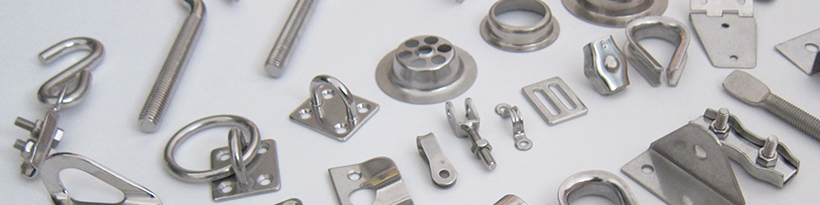
Vibratory Polishing
2. Mechanical Polishing
Mechanical polishing is one of the most basic and widely used methods in stainless steel surface treatment. Its core principle is to remove defects such as oxide layers, scratches and burrs on the stainless steel surface through mechanical cutting or grinding with tools such as grinding wheels, cloth wheels and polishing wax, so as to achieve a flat and bright surface.
According to polishing precision, mechanical polishing can be divided into three stages: rough polishing, medium polishing and fine polishing. Rough polishing mainly removes obvious surface defects to lay the foundation for subsequent polishing; medium polishing further refines surface texture and reduces roughness; fine polishing can make the stainless steel surface show a mirror finish with a reflectivity of more than 80%. This process is suitable for various stainless steel products, such as stainless steel kitchenware, tableware, decorative panels and hardware accessories.
Its advantages lie in mature technology, simple operation and intuitive polishing effect, which can maximize the metallic texture of stainless steel. The disadvantages are that it is difficult to polish workpieces with complex shapes, uneven polishing is easy to occur at edges and corners, and there are micro-scratches (invisible to the naked eye) on the surface after polishing, which may still cause local rust when exposed to a humid environment for a long time.
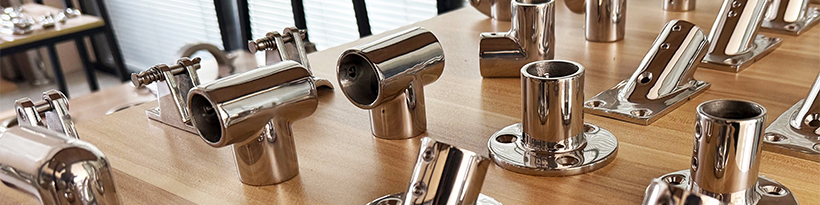
Mechanical Polishing
3. Pickling and Passivation
Pickling and passivation is a core stainless steel surface treatment process designed to improve corrosion resistance. It is mainly used to remove oxide scales, weld spots, iron contamination and other substances generated on the stainless steel surface during processing. At the same time, a dense passive film (mainly composed of Cr₂O₃) is formed on the surface, which blocks the contact between corrosive media and the substrate and greatly enhances the corrosion resistance.
The process flow usually includes degreasing, pickling, water washing, passivation, secondary water washing, drying and other steps. Degreasing can remove surface oil stains to create conditions for pickling; pickling mostly uses a mixed solution of nitric acid and hydrofluoric acid, which can quickly dissolve oxide scales and impurities; passivation generates a stable passive film through chemical reaction to extend the service life of stainless steel. This process is widely used in chemical equipment, pressure vessels, pipelines, stainless steel components and other scenarios requiring high-strength corrosion resistance.
The advantages are significant improvement in corrosion resistance, the passive film does not affect the matrix properties of stainless steel after formation, and the process has strong adaptability and can handle workpieces with complex shapes. The disadvantages are that the surface is matte grayish white after treatment, with general aesthetics. If the pickling concentration or time is not properly controlled, it may cause over-corrosion of the surface and affect the workpiece precision.
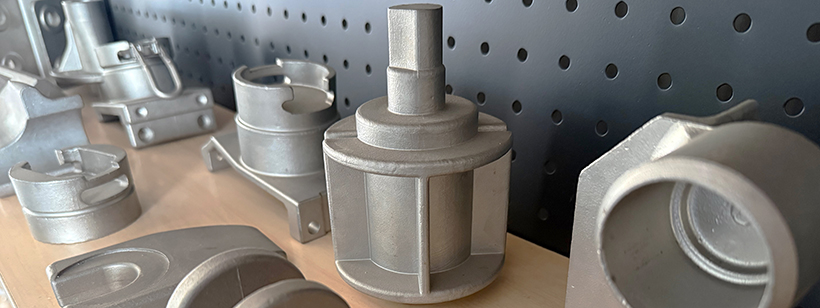
Pickling and Passivation
4. Electropolishing
Electropolishing, also known as electrochemical polishing, is a precision stainless steel surface treatment technology based on the electrolysis principle, belonging to the anodic dissolution process. The stainless steel workpiece is used as the anode and placed in an electrolyte composed of phosphoric acid, sulfuric acid, etc. By applying specific current and voltage, the metal atoms on the workpiece surface are selectively dissolved to achieve a flat and bright surface. At the same time, it can optimize the surface structure and improve corrosion resistance.
Compared with mechanical polishing, electropolishing can handle workpieces with complex shapes and small gaps, and there is no residual mechanical stress on the surface after polishing. The glossiness is more uniform and durable, reaching a mirror-level effect, and some high-end products can even achieve "mirror without trace". This process is often used in medical devices, food processing equipment, precision instrument accessories, high-end decorative stainless steel and other products with high requirements for surface precision and corrosion resistance.
The advantages are high polishing efficiency, excellent surface quality and better corrosion resistance than mechanical polishing. The disadvantages are that the electrolyte is corrosive, requiring proper environmental protection treatment, high equipment investment cost, and strict control requirements for process parameters (current, voltage, temperature).
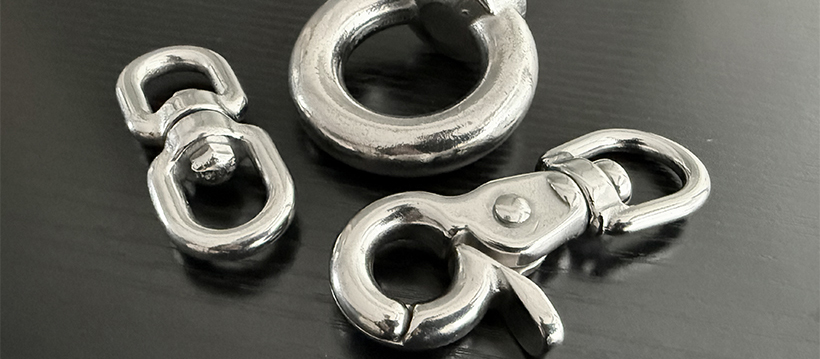
Electropolishing
5. Sandblasting
Sandblasting is a stainless steel surface treatment process that sprays abrasives (such as quartz sand, alumina sand and emery) onto the stainless steel surface at high speed via compressed air. With the impact and cutting effect of abrasives, a uniform rough surface is formed on the surface, showing a matte and frosted texture. According to different types and particle sizes of abrasives, various surface effects with different roughness can be created, from delicate matte to rough granular feeling.
This process can not only improve the appearance layering of stainless steel, but also enhance surface adhesion, providing a good base for subsequent painting, coating and other treatments. Application scenarios include architectural decorative panels, elevator panels, stainless steel doors and windows, hardware accessories, etc., especially suitable for products pursuing a low-key and wear-resistant texture.
The advantages are flexible process, unique surface effect and strong wear resistance. The disadvantages are that the rough surface is easy to accumulate dust and dirt, the cleaning difficulty is slightly higher than that of smooth surface, and dust is generated during the treatment process, requiring environmental protection dust removal equipment.
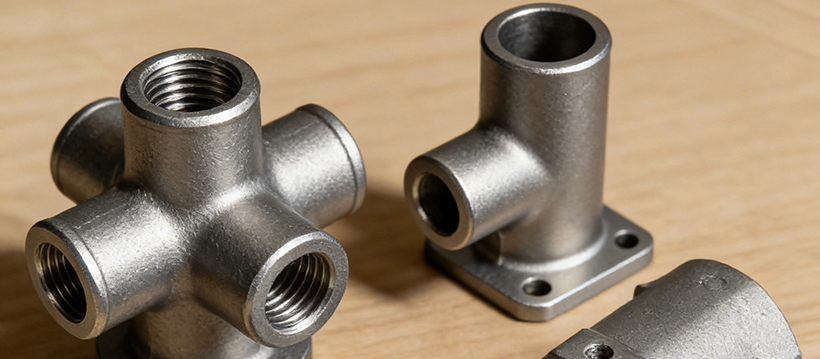
Sandblasting
6. Coloring Treatment
Stainless steel coloring treatment is a specialized stainless steel surface treatment that forms a colored oxide film or composite film on the surface through chemical, electrochemical and other methods. It retains the original properties of stainless steel while enriching its appearance colors to meet personalized design needs. Common coloring processes include chemical coloring, electrochemical coloring, vacuum coating coloring (PVD) and more.
Chemical coloring involves putting stainless steel into a specific chemical solution to form an oxide film through oxidation reaction. The color can be adjusted by controlling reaction time and temperature, such as gold, brown, blue, black, etc.; electrochemical coloring generates an oxide film with the help of electrolysis, with more uniform color and stronger stability; vacuum coating coloring (such as PVD coating) deposits metal ions such as titanium and zirconium on the stainless steel surface in a vacuum environment to form a wear-resistant and corrosion-resistant color film. The colors include rose gold, champagne gold, gun gray, etc., with high-end texture.
Coloring treatment is widely used in high-end architectural decoration, jewelry, hardware accessories, home appliance casings and other fields. The advantages are rich colors, good appearance texture, and strong wear resistance and corrosion resistance of the film layer. The disadvantages are high process cost, some coloring methods have requirements on the use environment, and fading and film peeling may occur after long-term exposure to sunlight or corrosive substances.
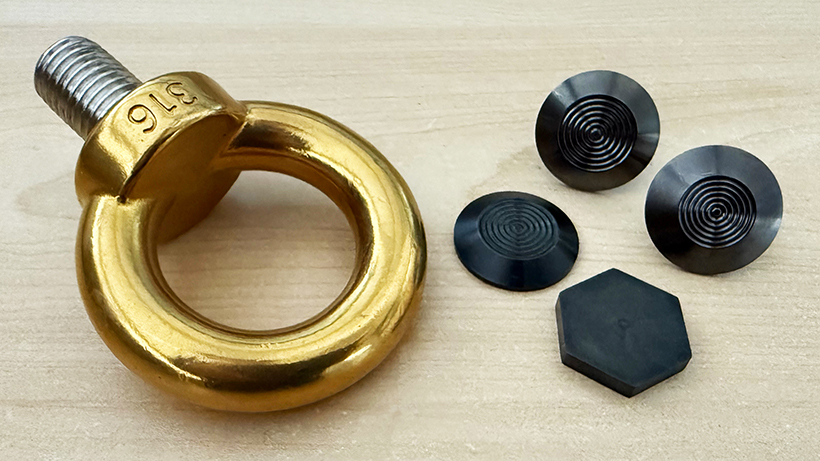
Coloring Treatment
7. Coating Treatment
Coating treatment is a protective stainless steel surface treatment that involves pasting a polymer film (such as PVC film, PE film) on the stainless steel surface to prevent scratches and pollution. Some coatings also feature specific patterns, textures or colors, offering both protective and decorative functions. It can be divided into single-sided and double-sided coating based on usage needs, with film thickness ranging from several microns to tens of microns.
This process is mainly used in the production, transportation and installation of stainless steel plates, coils, doors and windows, kitchenware and other products. It can effectively avoid surface damage during processing and handling. After installation, the film can be torn off to expose the original surface of stainless steel. Some functional coatings (such as antibacterial film, anti-fingerprint film) can also endow stainless steel with additional properties and expand application scenarios.
The advantages are low cost, good protection effect, convenient operation, and can be used with other surface treatment methods. The disadvantages are that the film has a service life, is easy to age and fall off when exposed to high temperature and ultraviolet environment for a long time, and inferior coating may leave adhesive marks, affecting the appearance.
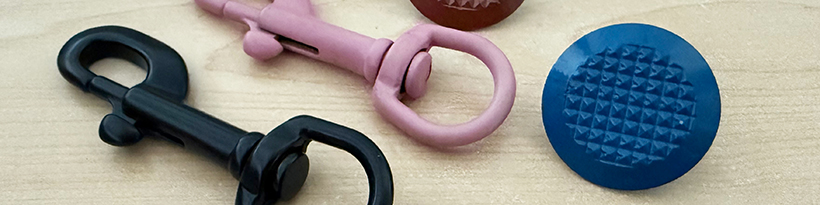
Coating Treatment
8. Other Special Surface Treatments
In addition to the aforementioned common stainless steel surface treatment methods, there are targeted special processes to meet specific scenario requirements. For instance, anti-fingerprint treatment (a functional surface treatment) applies an oil-repellent, water-repellent nano-coating to reduce fingerprint residue, widely used in home appliance panels, mobile phone accessories and bathroom products. Antibacterial treatment adds components like silver ions to inhibit bacterial growth, suitable for medical devices and food processing equipment. Nitriding treatment enhances surface hardness and wear resistance, applied to mechanical parts and cutting tools.
Conclusion
The selection of stainless steel surface treatment technology should be comprehensively considered based on the product’s application scenario, performance requirements, appearance design and cost budget. Each stainless steel surface treatment method has its unique advantages and disadvantages; reasonable combination (such as pickling and passivation + brushing, electropolishing + anti-fingerprint treatment) can maximize stainless steel’s performance advantages and increase product added value. With technological advancement, new stainless steel surface treatment processes (like environmentally friendly electrolyte polishing, multi-functional composite film coloring) are gradually popularized, expanding the application scope of stainless steel products.


 HuaxinCatalog Download